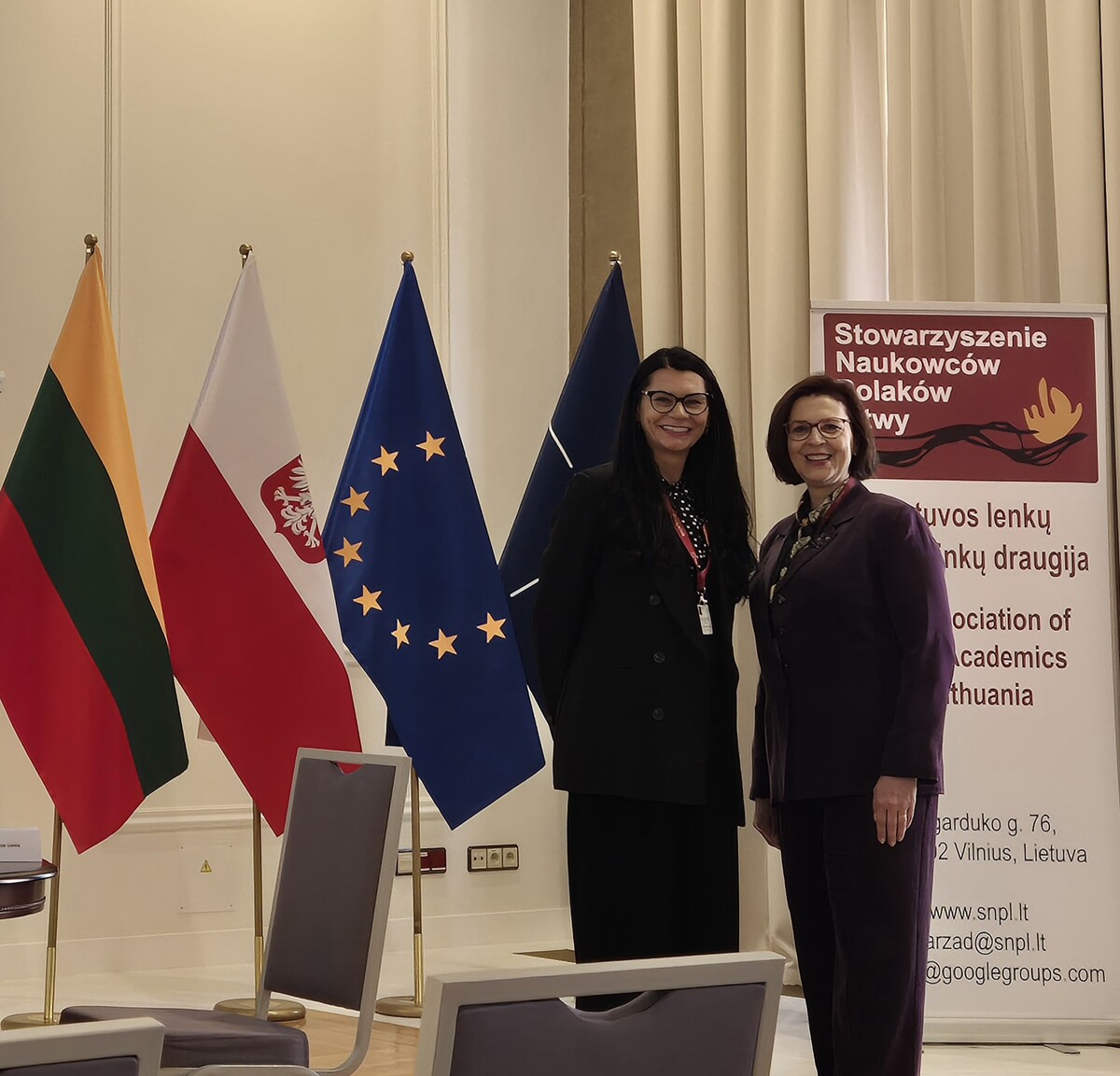
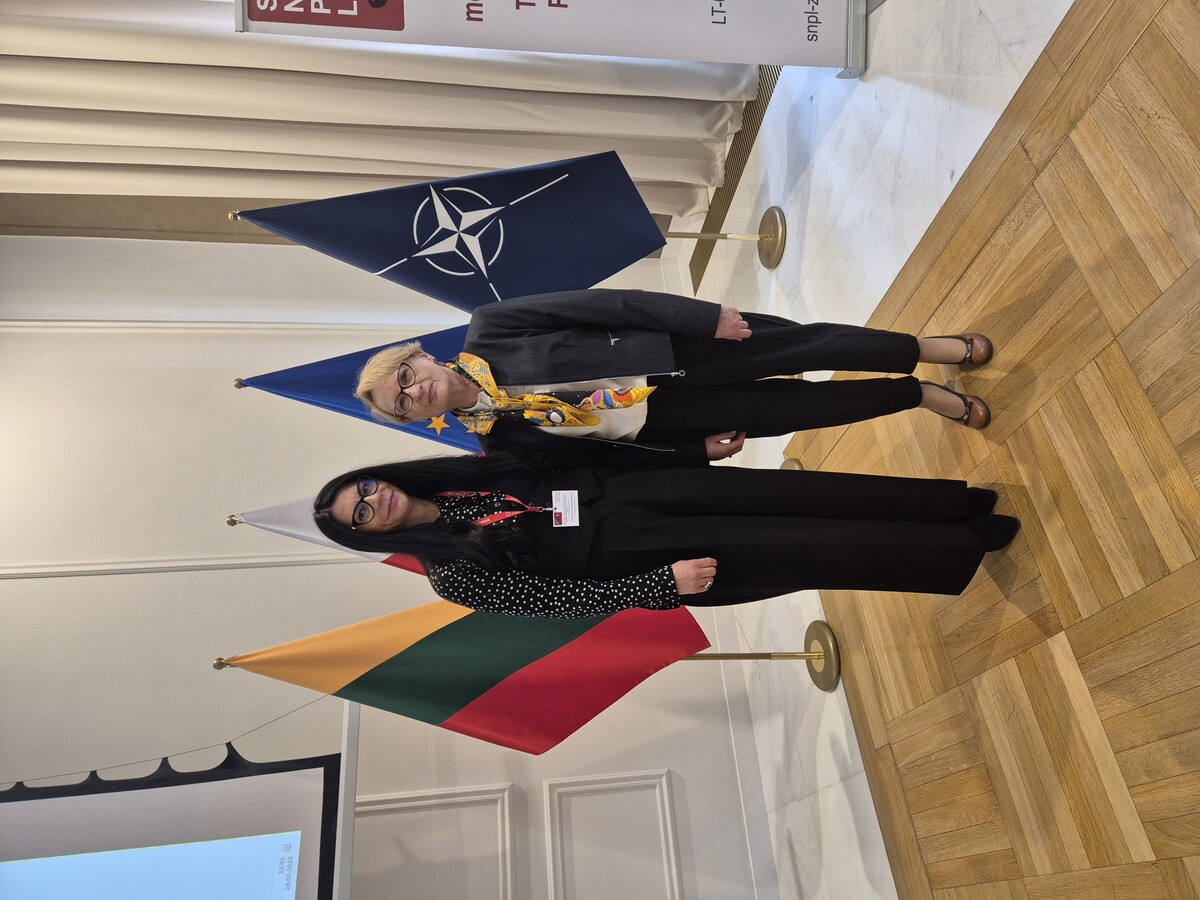
Professor Anetta Bogusława Strawińska from the Faculty of Philology at the University of Białystok attended the 13th International Interdisciplinary Academic Conference in Vilnius, organised by the Association of Polish Scholars in Lithuania, from 28 to 30 May 2026. Researchers from various academic centres in Poland and Lithuania debated the current challenges facing the modern world.
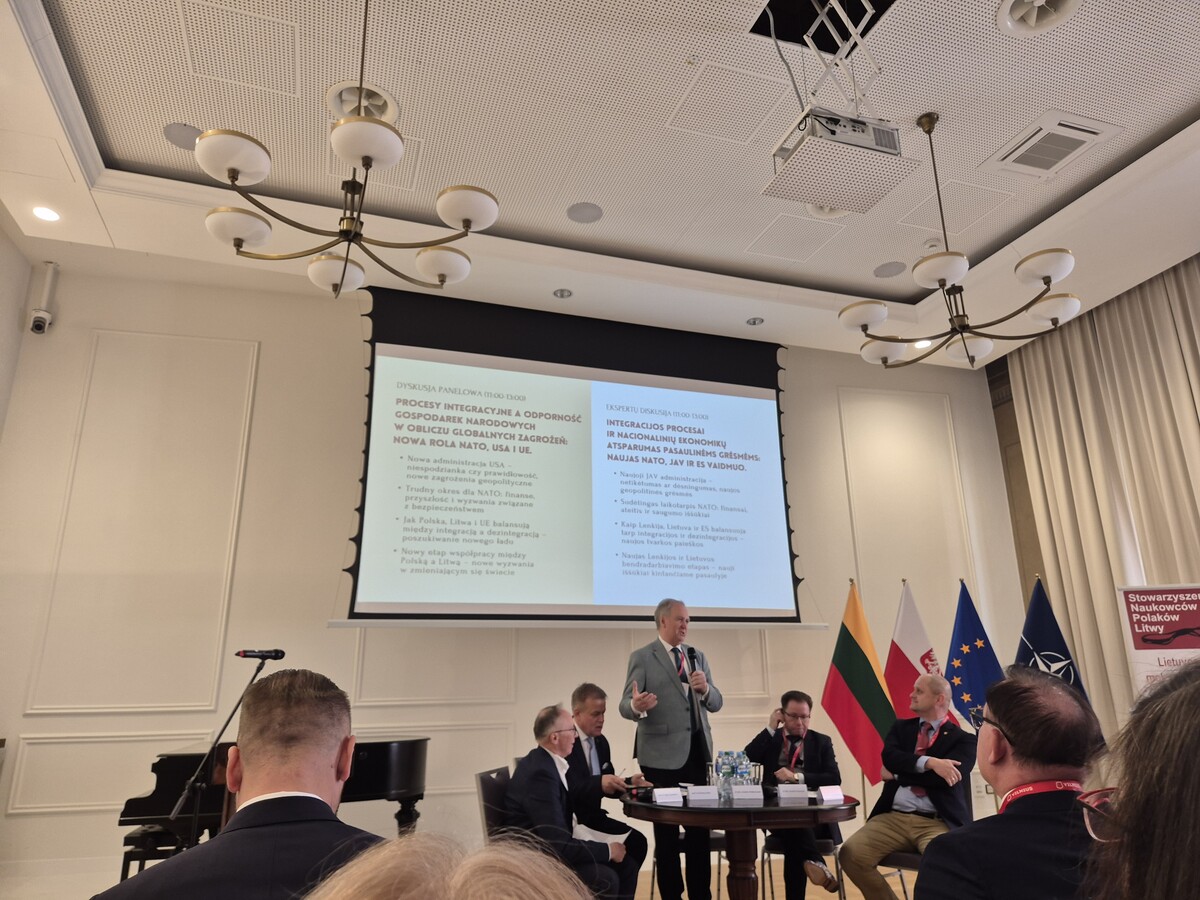
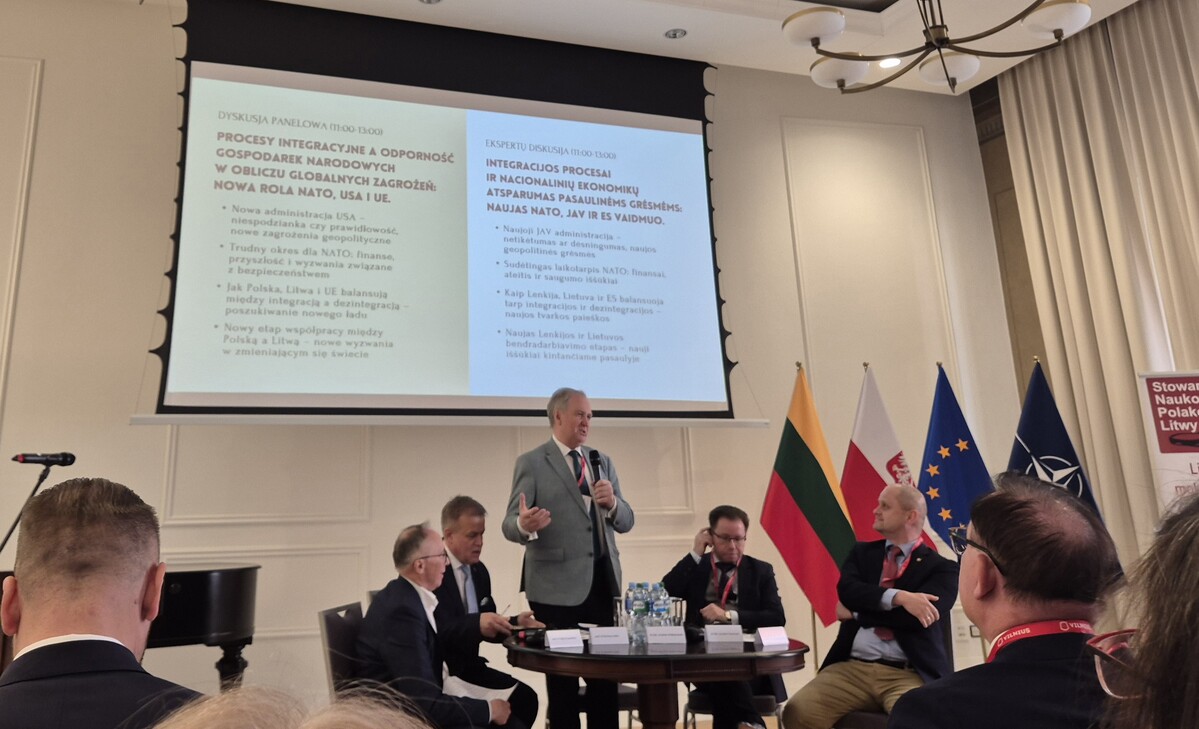
During the panel discussion, which took place at the Polish Embassy in Vilnius, specific issues were discussed, such as: the new US administration – a surprise or a foregone conclusion; new geopolitical threats; a difficult period for NATO: finances, the future and security challenges; how Poland, Lithuania and the EU are balancing between integration and disintegration – the search for a new order; a new phase of cooperation between Poland and Lithuania – new challenges in a changing world. Over the following days of the conference, topics discussed included issues related to digital challenges, education, the media and the preservation of the national identity of Poles in Lithuania. Professor Anetta Bogusława Strawińska delivered a paper entitled "Remarks on linguistic and cultural integration in the north-eastern borderlands through the eyes of purists at the turn of the 19th and 20th centuries".
This presentation should be seen as a contribution to the long-standing debate concerning the history of the Polish language in the north-eastern borderlands, which served as a place of ethnic (national) integration/ an area of (co-)existence of diverse cultures and languages/ a space for the formation of social identity, i.e. interaction, or rather confrontation, between many cultures (through constant contact with different values, norms and patterns of behaviour). With regard to the standardisation efforts of the turn of the 19th and 20th centuries, the Borderlands, as border regions, should be considered through the prism of a specific cultural space. The present analysis was qualitative in nature. The analytical-synthetic method employed allowed for the comprehensive examination of the phenomena in question within the context of human experiences, aspirations, communal existence, and coexistence with other nations.
The following distinguishing features of borderland/peripheral/remote areas were discussed: 1. the belief that life is situated on the margins; 2. polyphony, a multitude of voices; 3. recognition of the complexity of the borderland is an acceptance of a vision of the world that is axiologically ambivalent; 4. the category of otherness; 5. being in the face of otherness. Defensive purism, understood as a rigorous concern for the purity of language and culture, plays a key role in identity-building, but often conflicts with integration processes. Extreme purism hinders the assimilation of new group members, for whom errors are a natural part of linguistic and cultural existence. However, it should be borne in mind that in certain socio-political situations, such as during national subjugation, the inclusion of an emotional factor in the assessment of linguistic issues cannot be considered reprehensible.
©2024 All rights reserved.